


Non-Fiction
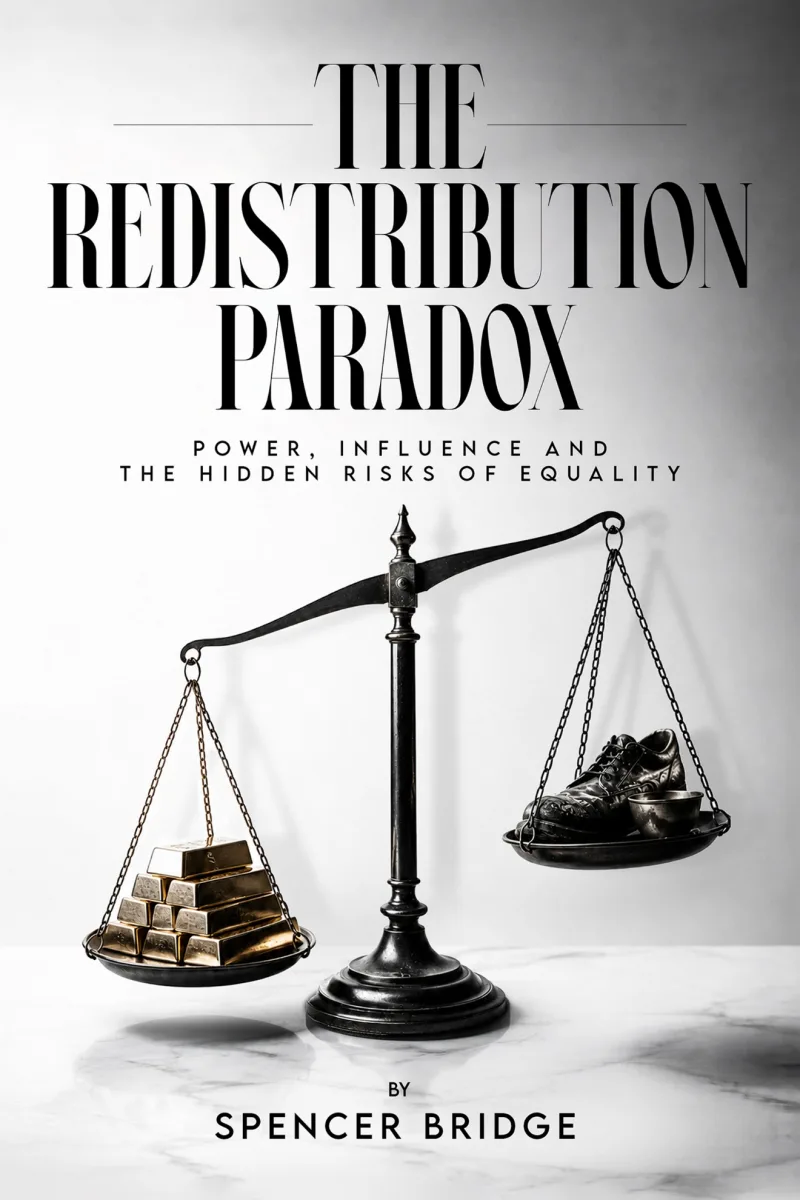
The Redistribution Paradox
Power, Influence and the Hidden Risks of Equality
By Spencer Bridge
- Forthcoming, 6 November 2026
- Paperback ISBN: 9781918607444
- Hardback ISBN: 9781918607451
The idea returns again and again. If wealth is too concentrated at the top, why not take some of it and share it? It sounds simple. It sounds fair. And in a world of rising living costs, housing crises, and deepening inequality, it sounds more reasonable than ever.
But what happens next?
In The Redistribution Paradox, Spencer Bridge takes readers beyond the slogan and into the reality of how modern economies actually function. Drawing on history, behavioural insight, and real-world examples, from billionaires and global markets to lottery winners whose lives changed overnight, he confronts a deeper question: is moving money enough to create a fair and stable society?
The book explores what happens when wealth that exists largely through shares, property, investments and other assets is suddenly treated as though it were simply cash waiting to be redistributed. It examines how markets, incentives, confidence, inflation and human behaviour can influence what happens after wealth is moved, and why the effects of redistribution may extend far beyond the initial transfer.
It also considers the difference between income earned through work and wealth created through ownership, and how access to assets can influence opportunity, security and the ability to take risks. As wealth accumulates, it can create further opportunities for investment and growth, raising questions about whether simply changing who holds wealth is enough to change the structures that create inequality in the first place.
This is not a book that argues for or against redistribution. It is a book about understanding consequences, because the real challenge is not simply moving wealth. It is preserving the systems that turn wealth into jobs, stability, and everyday life.
The deeper question is what happens in the real economy after a redistribution takes place. What happens in housing markets, businesses, supply chains, employment and everyday spending? And if the underlying structures remain unchanged, can inequality eventually begin to emerge again?
Powerful, clear, and deeply relevant, The Redistribution Paradox asks a harder question:
How do we build a fairer economy without breaking the one we depend on?