Children's Book
- Home
- Our Services
- Editing
Editing
Every manuscript begins with an evaluation to determine the type of editing required, whether developmental, line, copy, or a combination. The author reviews and approves the manuscript at each stage.
Manuscript Evaluation
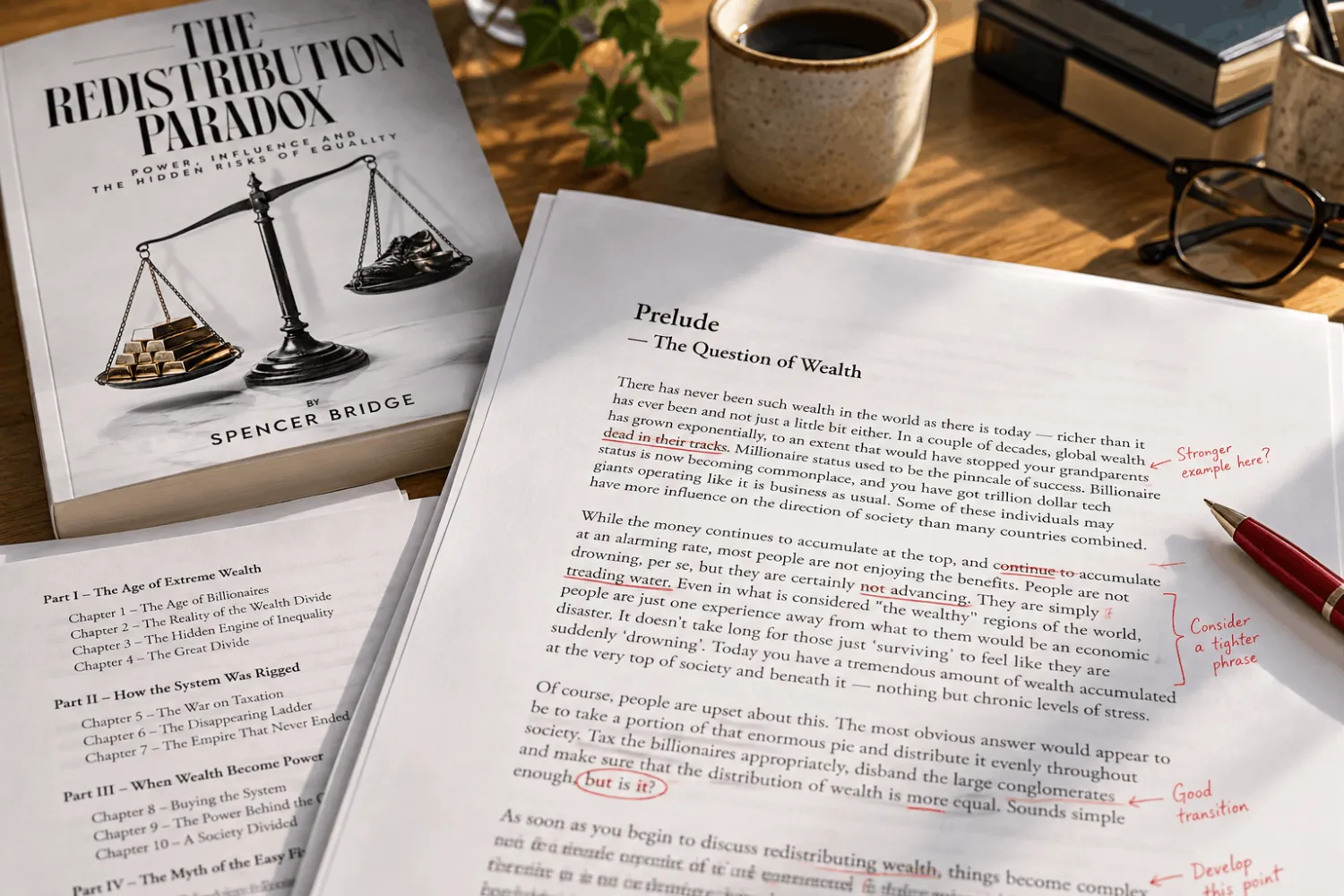
Before any editing begins, a manuscript is read in full to assess what kind of work it actually needs, developmental, line, copy, or a combination, rather than assuming every book requires the same treatment. This is a diagnostic step, not a pass or fail judgement, its only purpose is to decide where the editing process should start.
Developmental Editing
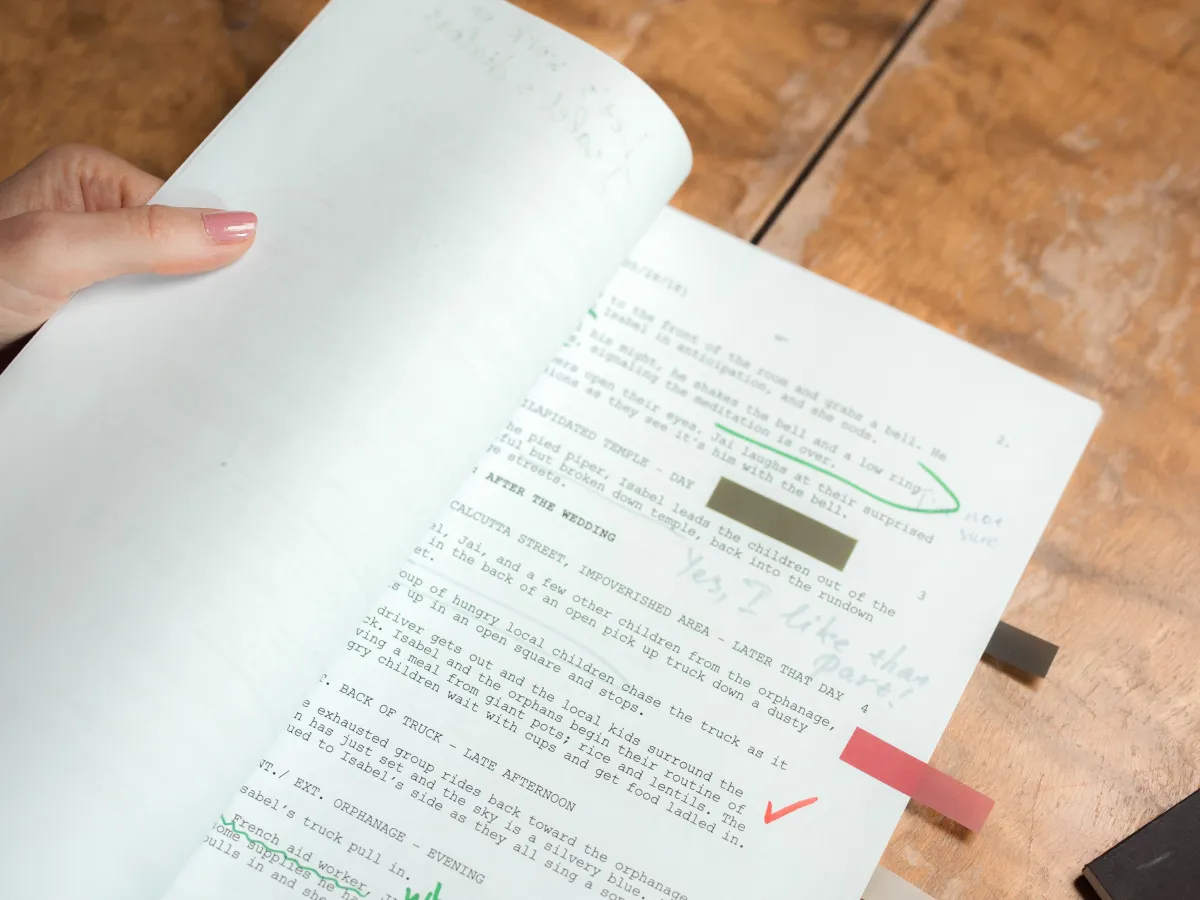
Developmental editing looks at the manuscript as a whole: structure, pacing, plot or argument, and whether the book delivers on what it sets out to do. This is the stage where an editor might flag a chapter that slows the middle of the book, a subplot that goes nowhere, or a section of non-fiction that needs reordering to land properly. It happens before line or copy editing, since restructuring a chapter after it’s been polished line by line wastes both the author’s time and the editor’s.
Line Editing
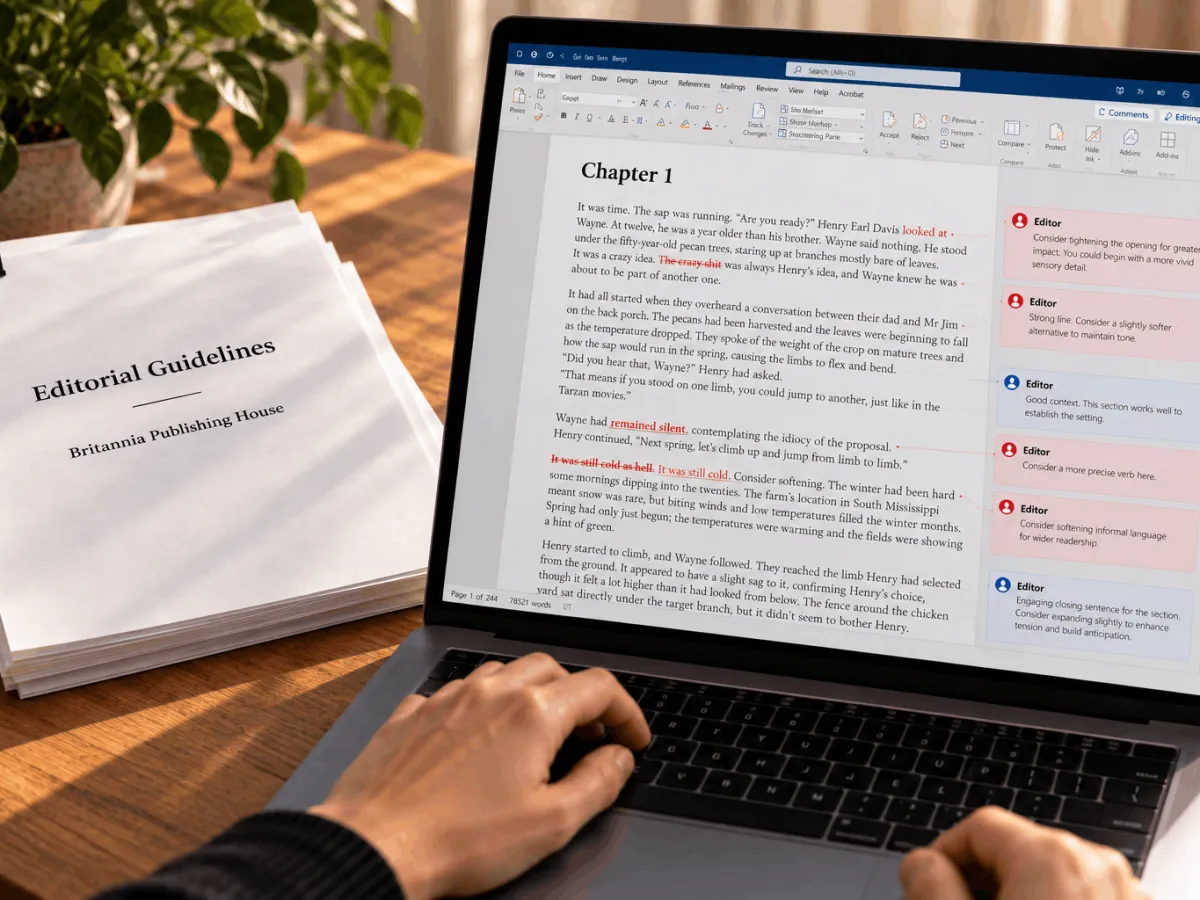
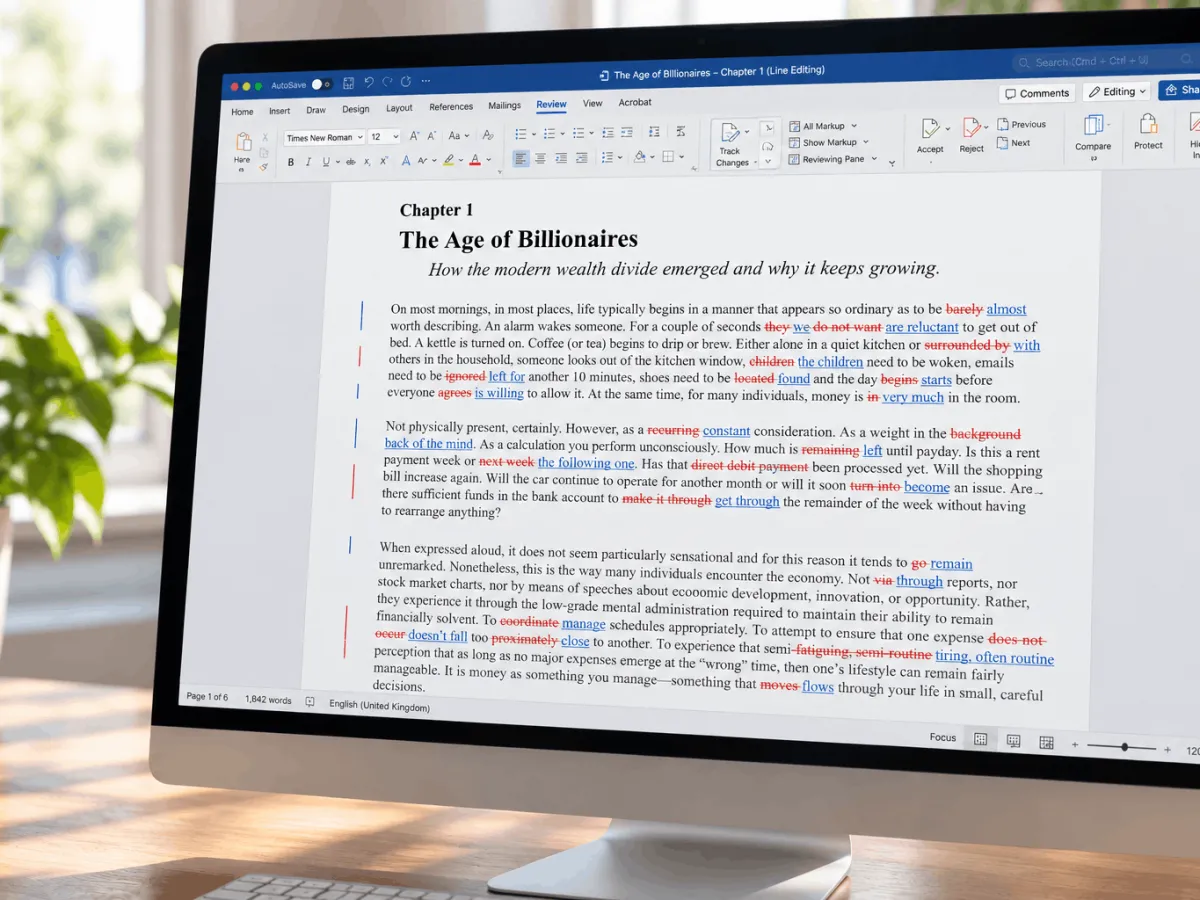
Line editing works at the level of the sentence and paragraph: flow, rhythm, word choice, and whether the writing says what the author means as clearly as it could. This is where repetitive phrasing gets caught, where a sentence that reads awkwardly out loud gets smoothed, and where the author’s voice gets sharpened rather than replaced. A line edit assumes the structure underneath it is already sound.
Copy Editing
Copy editing is the final language pass: grammar, punctuation, spelling and consistency, checking that a character’s eye colour or a company’s founding year doesn’t change halfway through the book. It’s the stage most manuscripts need regardless of how much developmental or line work came before it, since even a well-structured, well-written manuscript can carry small errors a reader would notice.
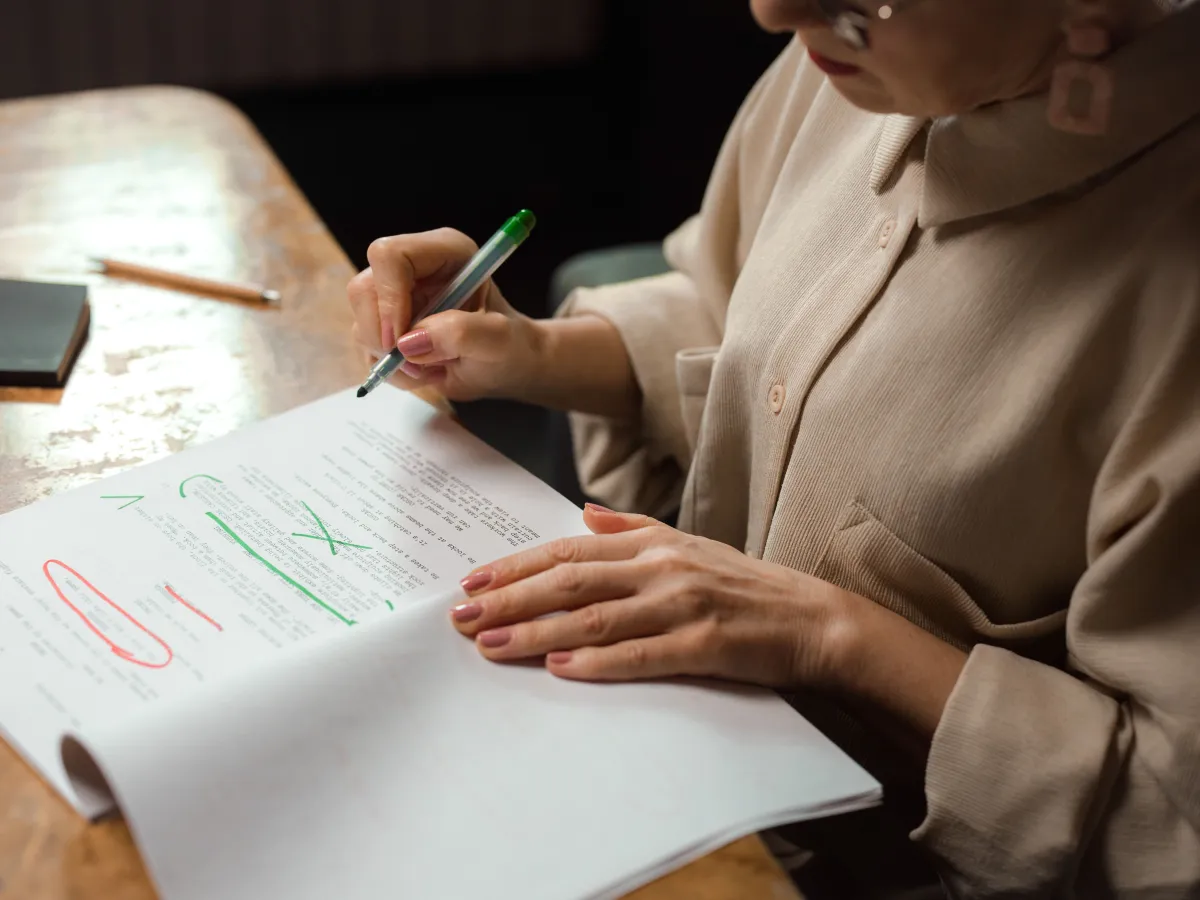
Every change made at any of these stages goes back to the author for review. Nothing is finalised without their approval.
Editorial Standard Seal
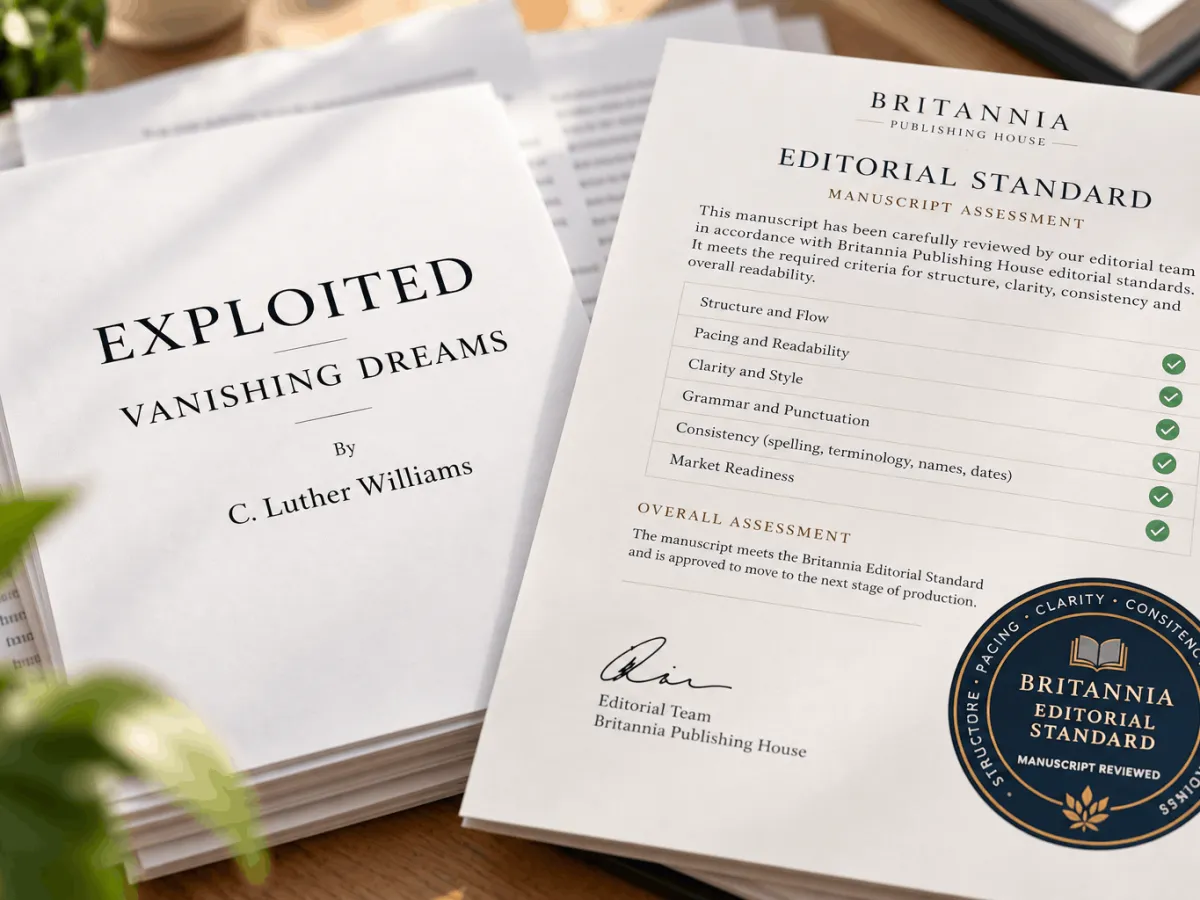
Once editing is complete, the manuscript is assessed against five criteria: structural coherence, pacing, clarity, grammatical consistency and market readiness. A panel of editors approves the manuscript against these criteria before it moves into publication.
 Read what our authors say
Registered in England & Wales, No. 16937618
Authors retain 100% of rights and royalties
Talk to a Publishing Consultant
If you're not sure what your manuscript needs, or which of these services actually apply to your book, a conversation is often faster than working it out alone. Your named consultant can walk through your manuscript with you and explain what a realistic path to publication looks like, before you commit to anything.
Work from the Britannia Imprint
Titles shaped by partnerships with authors across many genres and audiences.
Recent Titles
-
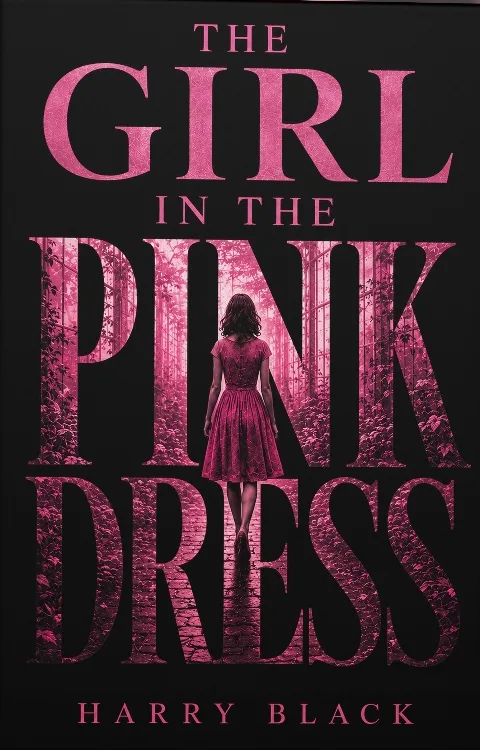
Crime Thriller
The Girl in the Pink Dress
-
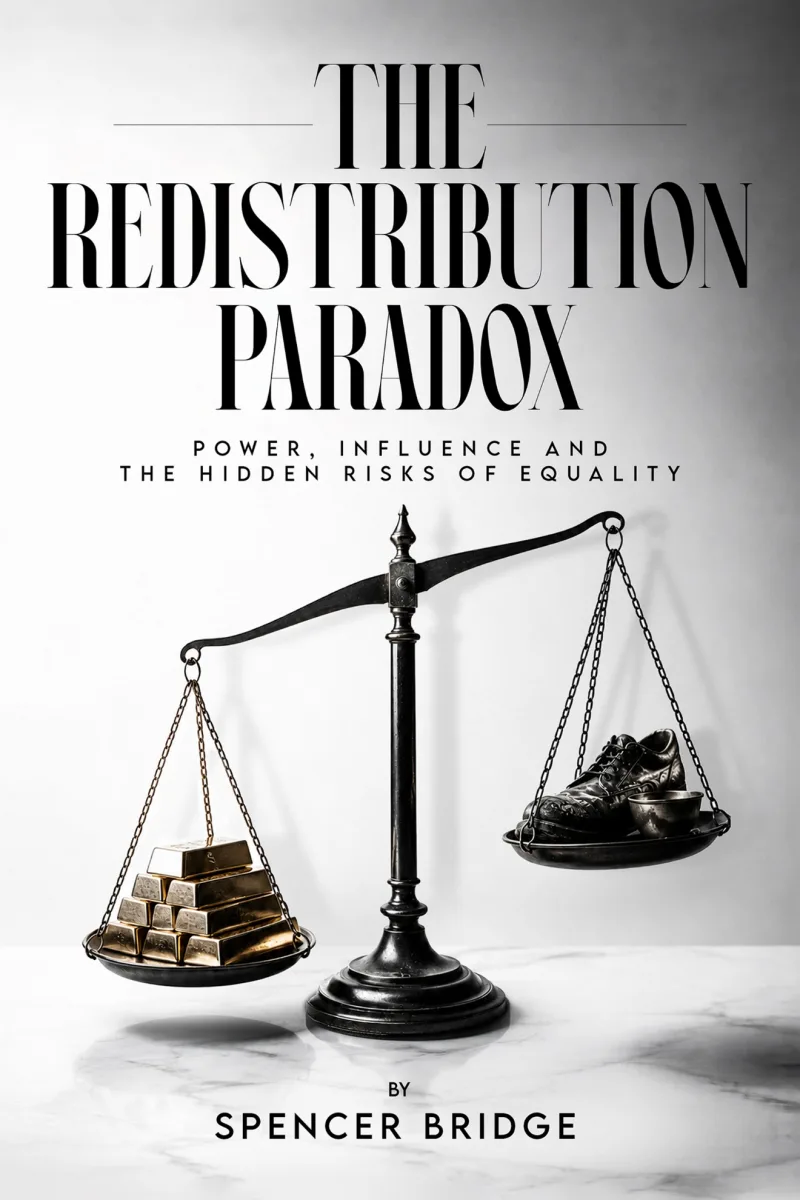
Non-Fiction
The Redistribution Paradox
-
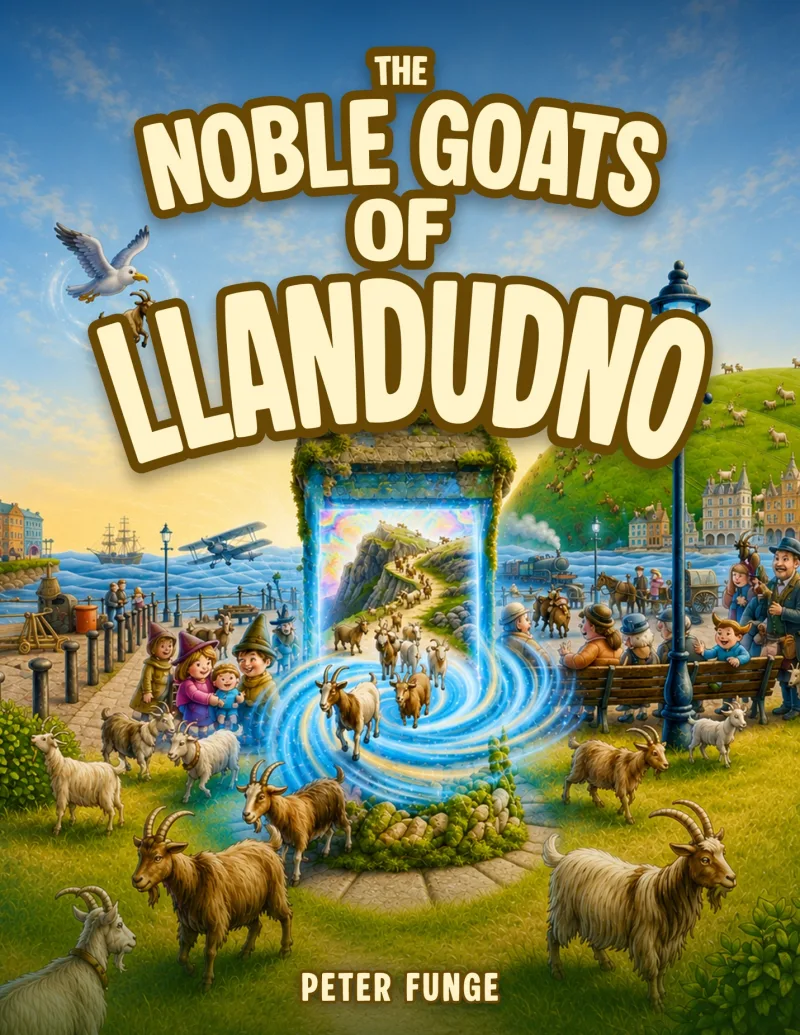
Children's Book
The Noble Goats of Llandudno
-
Self-Help
The State of Becoming
-
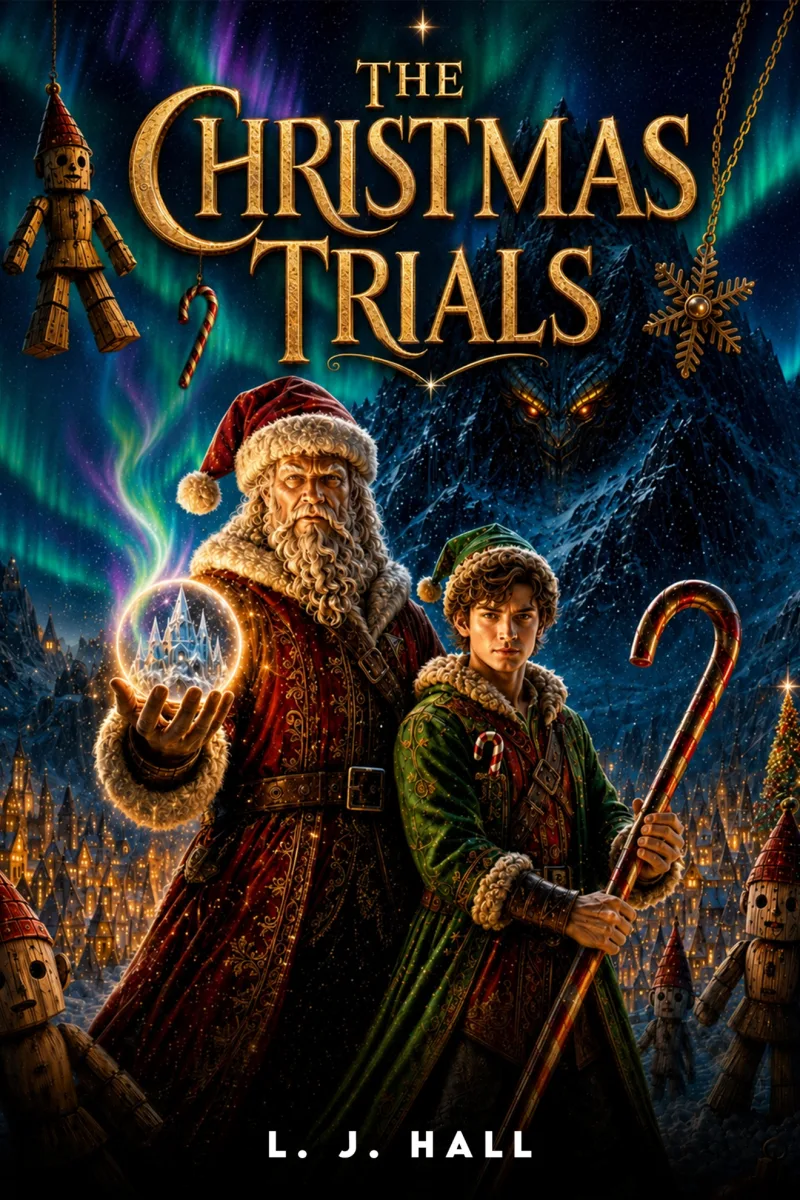
Fantasy
The Christmas Trials
-
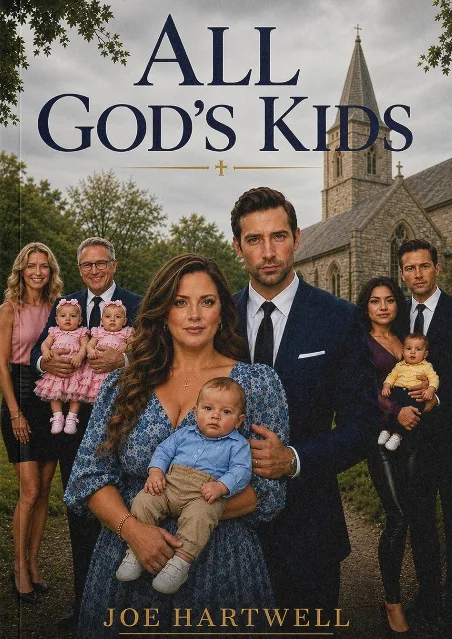
General Fiction
All God's Kids
-
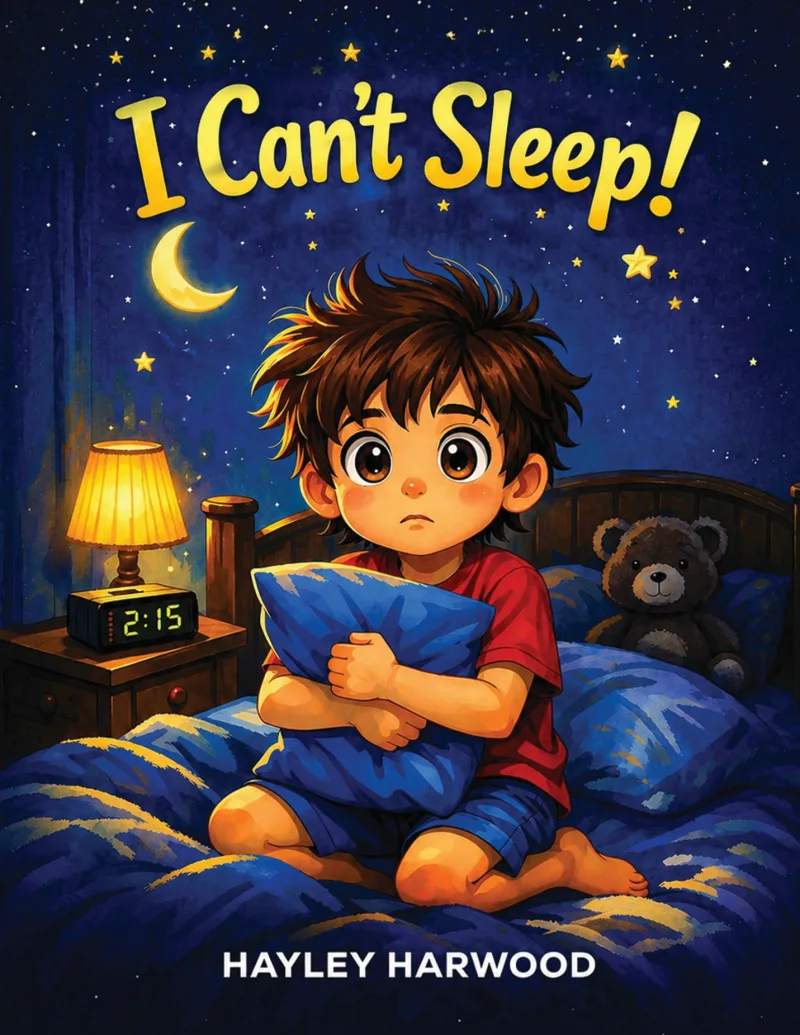
Children's Book
I Can't Sleep

Other Services You Might Be Interested In

Design and Formatting
Every cover begins with the author’s own direction and preferences, since it is their book and their name it w…
See more

Our Publishing Process
Eleven steps take a manuscript from submission to a published, professionally distributed book, with a project…
See more

Ebook and Audiobook Publishing
Our ebook and audiobook publishing services help authors prepare their books for digital distribution. We tail…
See more

Ghostwriting
For authors who have an idea but have not written a manuscript, a ghostwriter produces the full draft in the a…
See more
FAQs
Every manuscript is read in full before any work begins, so the editing that follows matches what the book actually needs rather than a single process applied to every title.
It's the final check before publication. A panel of editors confirms the manuscript meets five criteria, structure, pacing, clarity, grammar and market readiness, before it's approved to move forward.
On average, 8 to 10 weeks, depending on the type of editing the manuscript requires.
Cost depends on the manuscript's word count and the type of editing required, and is confirmed before any work begins.
Yes. The same editor works on your manuscript from start to finish, and a dedicated project manager acts as your main point of contact, keeping communication clear between you and the production team throughout.

We Help Authors Get Published and Their Books Sold
Start a no-obligation conversation with one of our publishing consultants about what you want your book to do, and the most sensible way to get it there.
What you’ll get:
- An informal conversation about your project
- Straight answers to anything you want to ask about publishing
- Honest advice on the options actually open to you
- No obligation, no commitment and no hard sell